
Practical Training for Addiction Treatment
Real Tools for Counselors, Managers, and Treatment Staff
Fundamentals of Addiction Treatment
-
Essential Manual of Addiction Counseling: A Practical Guide
Regular price $ 500.00 MXNRegular price$ 800.00 MXNSale price $ 500.00 MXNSale -
When helping doesn't work
Regular price $ 500.00 MXNRegular price$ 800.00 MXNSale price $ 500.00 MXNSale -
Essential Counselor Toolkit
Regular price $ 150.00 MXNRegular price -
Why resistance is not a treatment failure
Regular price $ 300.00 MXNRegular price$ 800.00 MXNSale price $ 300.00 MXNSale



Consejeroenadicciones.com
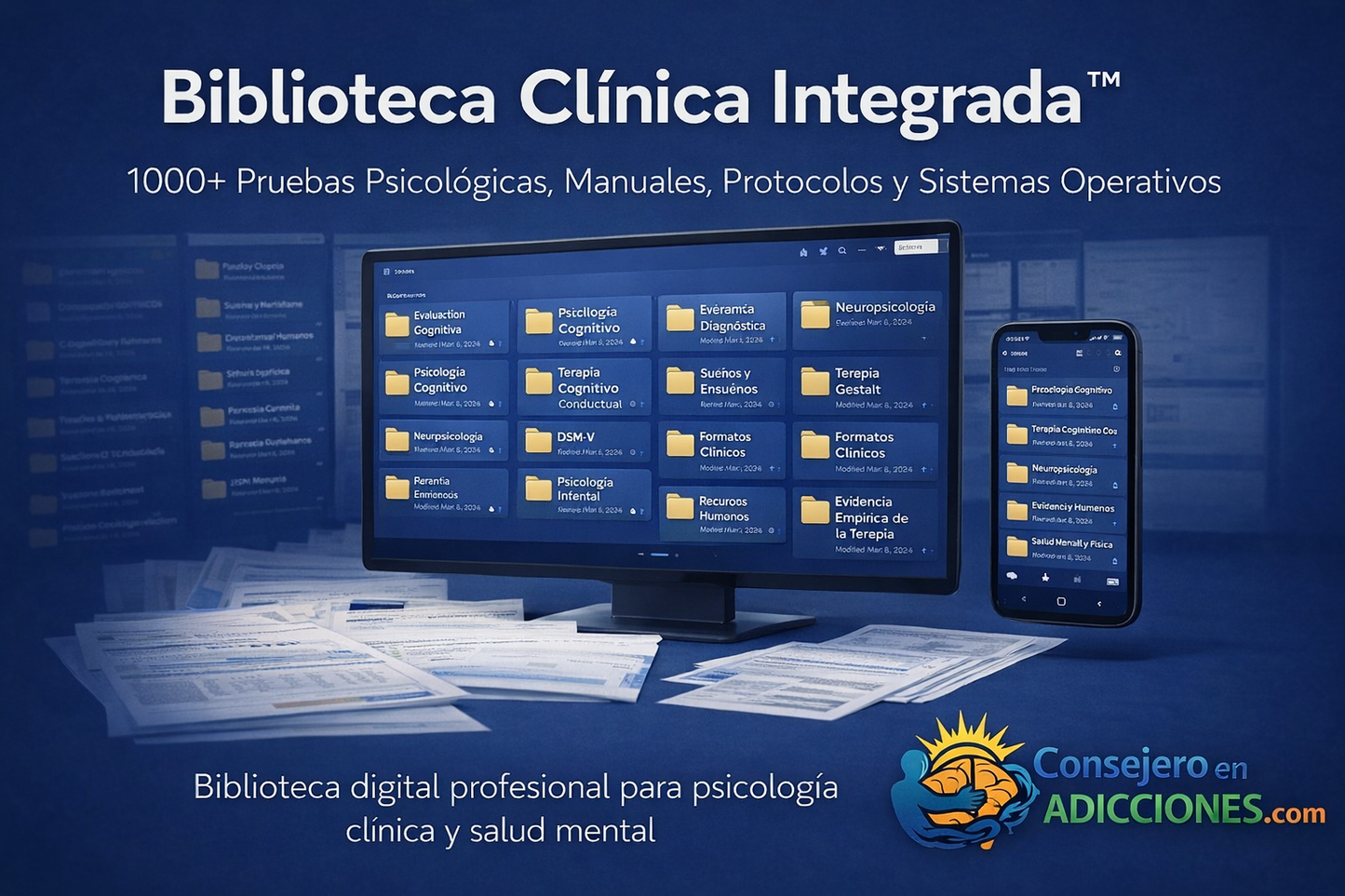
Integrated Clinical Library™

Experience applied to treatment
This project was born out of more than a decade of direct work in addiction treatment programs, both residential and outpatient.
The content is designed based on the real operations of treatment centers: managing resistant clients, working with families, clinical decision-making, and institutional boundaries.
It is not academic or motivational material. These are practical frameworks used in daily treatment.

Consejero en adicciones
Professional Counselor – Foundational Clinical Practice System

Real problems in daily work
In the daily work of addiction treatment, situations arise that are rarely taught clearly.
Clients who enter without motivation, constant resistance, involuntary patients who challenge the program structure, and teams that hesitate between accompanying, controlling, or giving in.
Added to this is working with families who pressure, interfere, or negotiate outside the process, generating clinical burnout and operational confusion.
This material addresses these situations from real practice: boundaries, authority, decision-making criteria, and institutional management without unnecessary escalation.
-
Who is it for?
- Addiction counselors in training or in practice
- Directors and managers of treatment centers
- Case managers, coordinators, and technical staff
- People who work with involuntary or highly resistant clients
- Families who need to understand the treatment process without romanticizing it
-
Who is it not for
- Motivational or inspirational material
- Exclusively academic or theoretical approaches
- Promises of "quick recovery"
- Content designed for emotional consumption
- Individuals who seek to avoid structure, limits, or responsibility in treatment

Consejeroenadicciones.com
Essential Manual of Addiction Counseling: A Practical Guide
How is this material designed
This content is not intended as academic training or motivational material.
It is built from the daily practice of addiction treatment and from the real decisions that must be made within a program.
It differs because:
- It starts from real situations, not ideal models
- It uses clear and direct language, without unnecessary clinical jargon
- It prioritizes decision criteria over abstract concepts
- It integrates limits, structure, and responsibility as part of the therapeutic process
- It considers the operational, legal, and cultural differences between treatment systems
Guides and Resources for Addiction Counselors
View all-

¿Qué derechos tiene un centro de rehabilitación...
Un centro de rehabilitación en México sí tiene derechos: negar el ingreso, dar de alta y defenderse en un acta. Cuáles son y qué se necesita para usarlos.
¿Qué derechos tiene un centro de rehabilitación...
Un centro de rehabilitación en México sí tiene derechos: negar el ingreso, dar de alta y defenderse en un acta. Cuáles son y qué se necesita para usarlos.
-

El aviso al Ministerio Público no legaliza un i...
El aviso al Ministerio Público sale de la NOM-028 y tiene plazo de 24 horas. Pero no autoriza nada, y en 2022 la ley cambió. Qué sí sostiene un ingreso.
El aviso al Ministerio Público no legaliza un i...
El aviso al Ministerio Público sale de la NOM-028 y tiene plazo de 24 horas. Pero no autoriza nada, y en 2022 la ley cambió. Qué sí sostiene un ingreso.
-

Fentanilo en México: lo que una familia necesit...
El fentanilo en México casi nunca se compra a propósito: aparece mezclado. Cómo se ve una sobredosis, qué es la naloxona y qué puede hacer tu familia hoy.
Fentanilo en México: lo que una familia necesit...
El fentanilo en México casi nunca se compra a propósito: aparece mezclado. Cómo se ve una sobredosis, qué es la naloxona y qué puede hacer tu familia hoy.
-

¿Qué se necesita para abrir un centro de rehabi...
Abrir un centro de rehabilitación en México pide aviso sanitario, personal, expedientes y protección civil. Los seis frentes y en qué orden se resuelven.
¿Qué se necesita para abrir un centro de rehabi...
Abrir un centro de rehabilitación en México pide aviso sanitario, personal, expedientes y protección civil. Los seis frentes y en qué orden se resuelven.


